
Guide
Why a Door Goes Off Track in Ashburn
Ashburn's 1980s-90s housing stock and cold winters put real strain on track alignment. Here's what actually knocks a door off track and when to call.
Local detail
How Local Conditions Play In
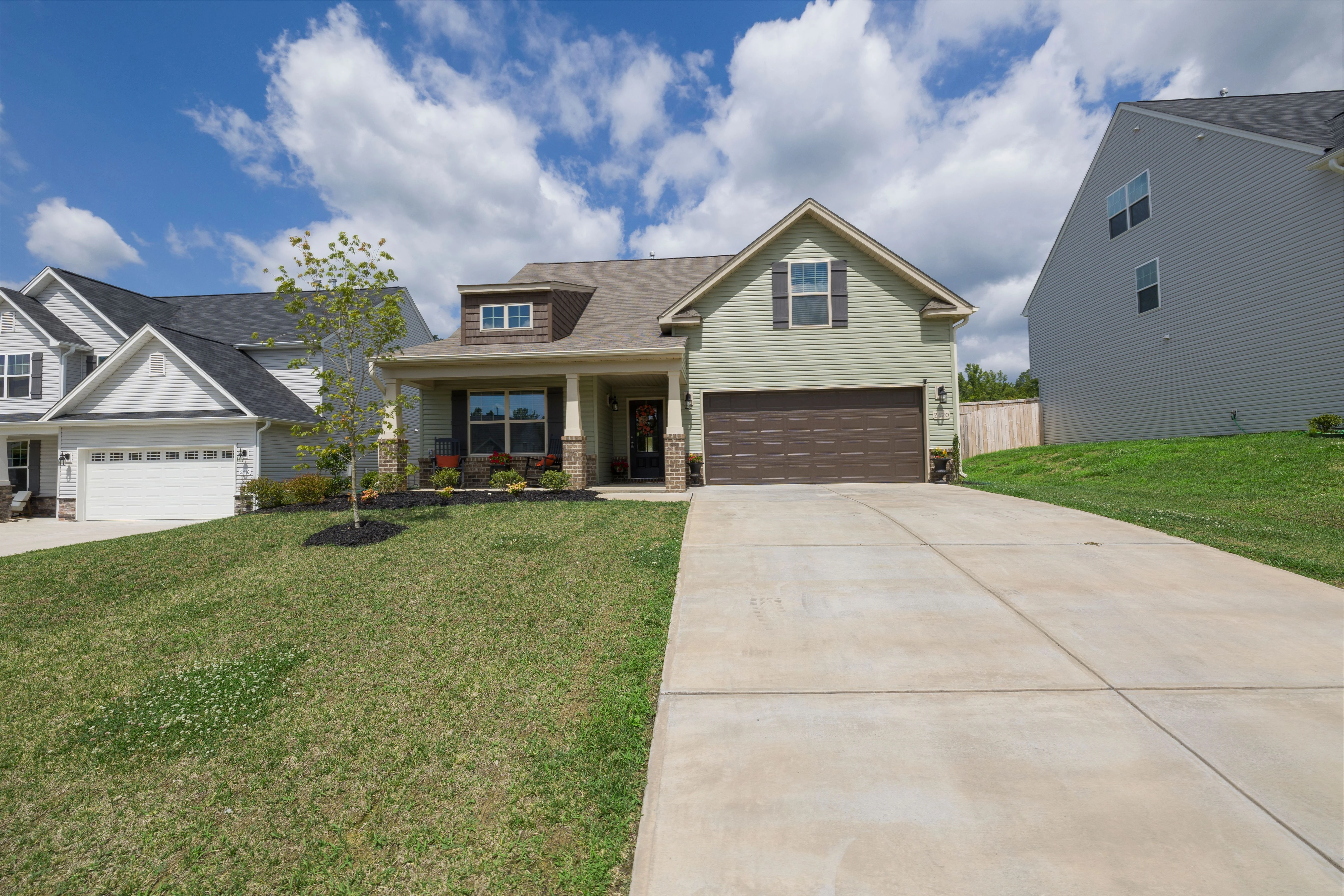
Most of the housing around Ashburn went up between 1938 and 2015, with the bulk of it dating to the 1980s and 90s across the 31 named subdivisions in this area. That matters because tracks and rollers from that era were built to a lighter spec than what goes in today, and 30-plus years of freeze-thaw cycles work on the brackets that hold those tracks to the framing. This region sits in a cold, severe climate band, which means the garage slab and the door itself go through repeated expansion and contraction all winter. Steel track brackets loosen a fraction of a millimeter at a time as the wood behind them swells and dries.
You don't feel it happening. You just notice one day that the door binds on one side going up, or that it slaps the track wall coming down. In homes near Belmont Country Club and the older sections built before the 2000s wave of construction, this bracket fatigue shows up earlier than in newer builds, simply because the wood and fasteners have had more winters to work on.
The area
What Most People Get Wrong
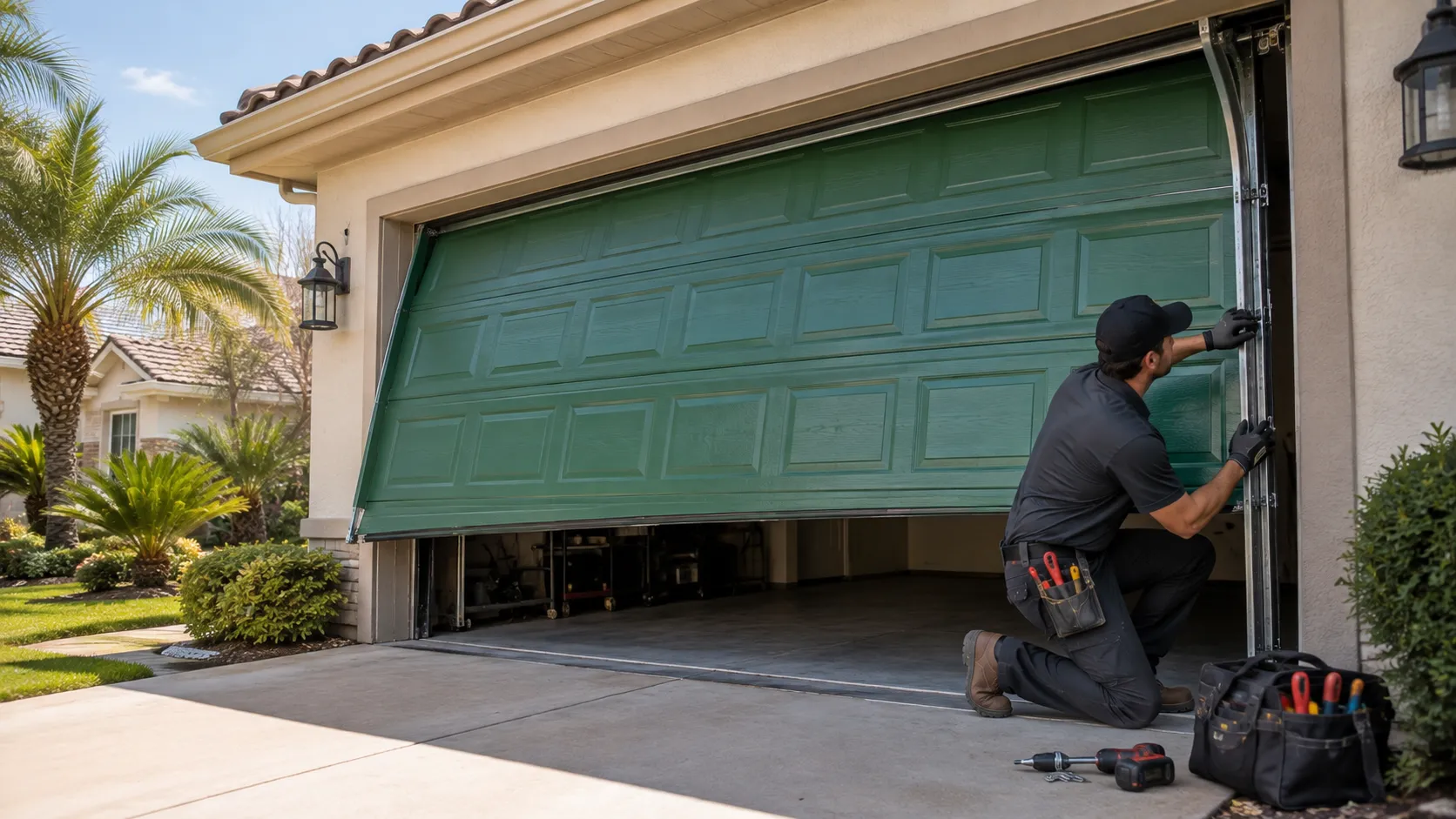
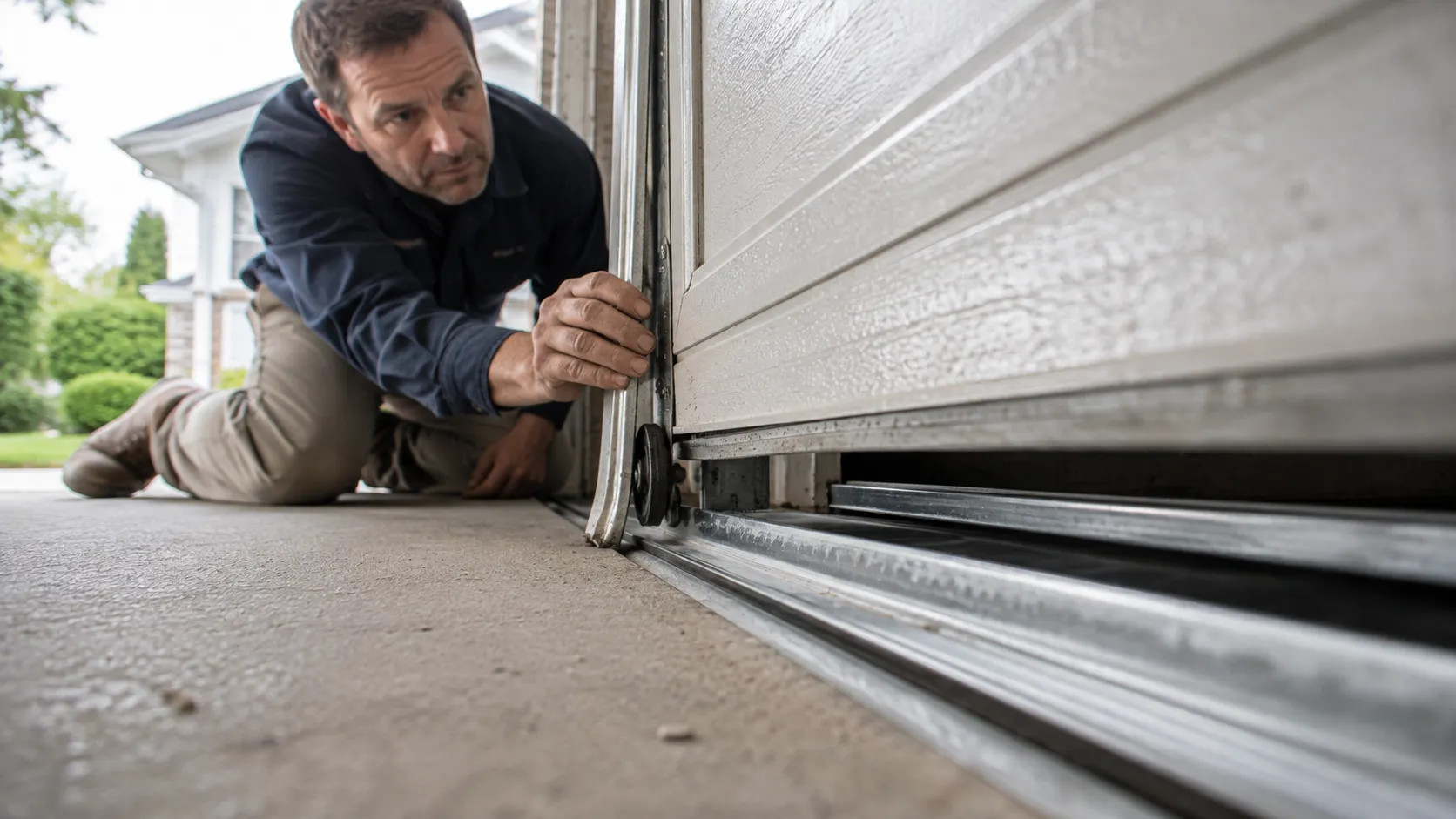
The common assumption is that a door off track means a bent track, so people reach for a rubber mallet or try to bend it back by hand. Most of the time that's not the failure. On the 1980s-90s stock that makes up most of this area's housing, the more frequent cause is a bracket that's pulled loose from the jamb, or a roller that's worn oval instead of round and is riding up the flange. Bending the track to compensate just moves the binding point somewhere else.
Another mistake: people assume it's a spring problem because the door feels heavy on one side. A door that's genuinely off track will usually show a visible gap between the roller and the track on one panel, not just heaviness. If your house is on the newer end of the 1938-2015 range, built after 2000, the brackets are usually better anchored, so track failure here is more often a roller or a hanger that's been hit by a car bumper or a stored ladder than age-related loosening.
What we find
What Is Going On
A door goes off track when the rollers stop tracking straight inside the channel, and that channel is only as good as the brackets and hangers holding it to the framing. In this climate band, the wood framing behind those brackets moves seasonally, and screws that were snug in August can back out a turn or two by February. Once a bracket has even a little play, the track flexes sideways under the door's weight every time it opens, and the rollers start climbing the flange instead of riding flat in the channel. On older homes from the earlier end of the 1938-2015 range, thinner gauge track combined with decades of that seasonal movement means the failure tends to be gradual - a little more noise each month before the roller finally jumps the rail.
On newer construction the track itself holds up fine, and it's almost always an impact, a loose fastener from installation, or a roller that's simply worn out. Either way, the door doesn't come off track from one bad day. It comes off from a slow loosening that finally lets go.
How we work
When to Get Help
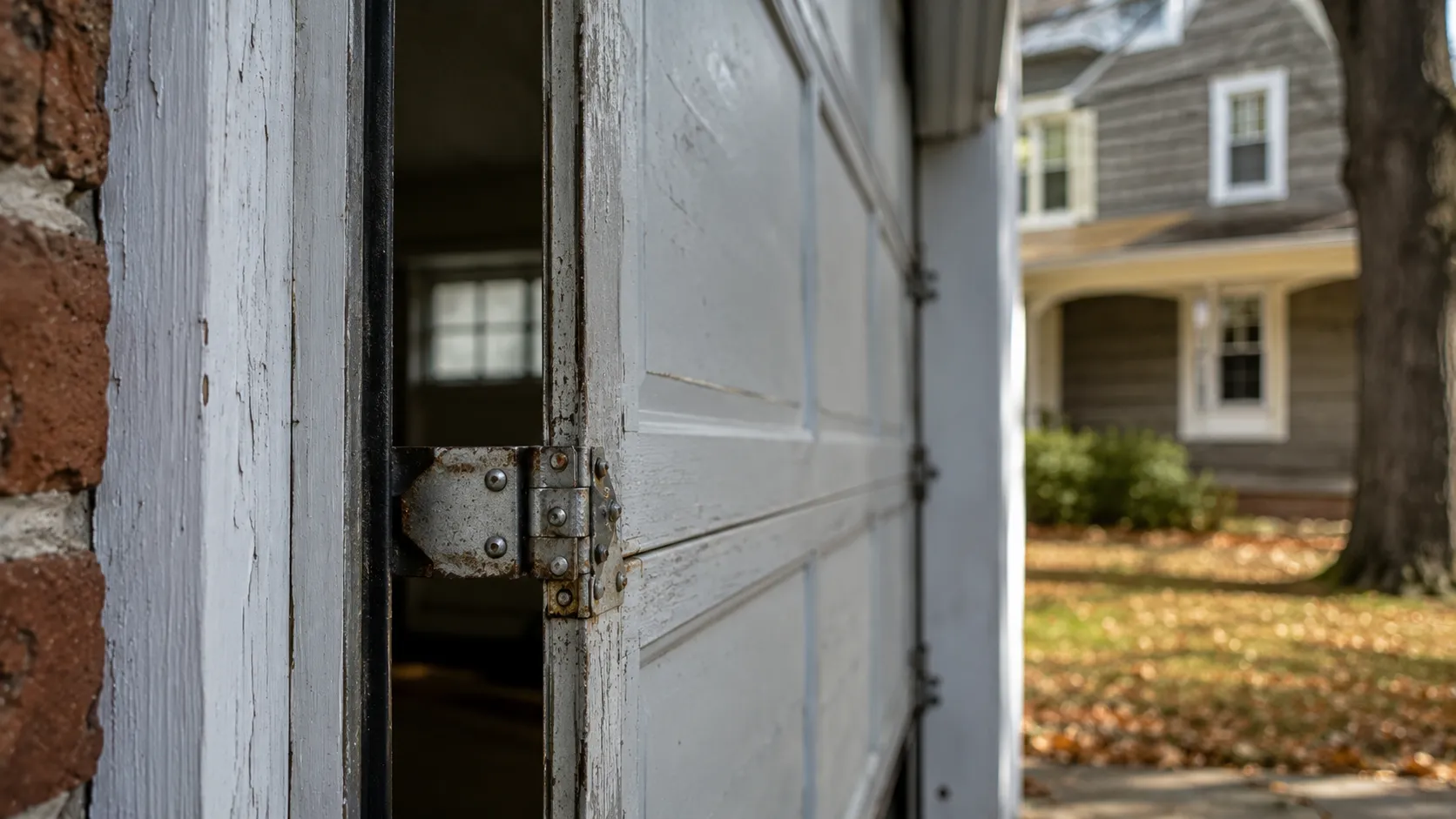
If the door is visibly leaning in the opening, if a roller has jumped clear of the track, or if the door only moves a few inches before binding, stop using the opener and call. Running the opener against a jammed track puts a lot of load on the motor and can bend the track further, turning a bracket fix into a full track replacement. A door that's merely noisy or drags slightly on one side can usually wait for a scheduled visit rather than an emergency call.
One honest limit: if the track is bent badly enough to have kinked the metal, we replace that section rather than try to straighten it back to true - a straightened track will look fine and still bind again within months. Given the age spread of housing in this area, we see both the slow-bracket-fatigue failures and the newer, impact-related ones regularly, so don't assume your door's age tells you which one you have.
Questions
Common questions
Why does my garage door only go off track in winter?
In this climate band, the wood framing around the door opening expands and contracts with cold and moisture more than people expect. Bracket screws that held tight through summer can work loose by midwinter, letting the track flex sideways under the door's weight until a roller finally climbs off the rail.
Is a door off track the same problem as a broken spring?
No. A broken spring makes the door heavy or unable to stay open, but the panels still sit flat in the track. An off-track door usually shows a visible gap between a roller and the channel on one side, and it typically binds or jams partway through its travel instead of just feeling heavy.
My house was built in the 1980s - is that why my track keeps loosening?
It can be a factor. A lot of the housing in this area dates to the 1980s and 90s, and track brackets from that period were installed to a lighter standard than current builds. Decades of seasonal wood movement behind those brackets is a common reason older tracks work loose gradually.
Ready when you are
Need a garage door sorted in Ashburn?
Ashburn Garage Door Pros repairs and installs garage doors, springs and openers in Ashburn, VA and the surrounding area.