
Guide
When the Power Goes Out and the Opener Won't Cooperate
Ice storms and aging 1980s-era openers don't mix well in Ashburn. Here's what actually fails, why, and when a manual release isn't enough to get you moving.
Local detail
How Local Conditions Play In
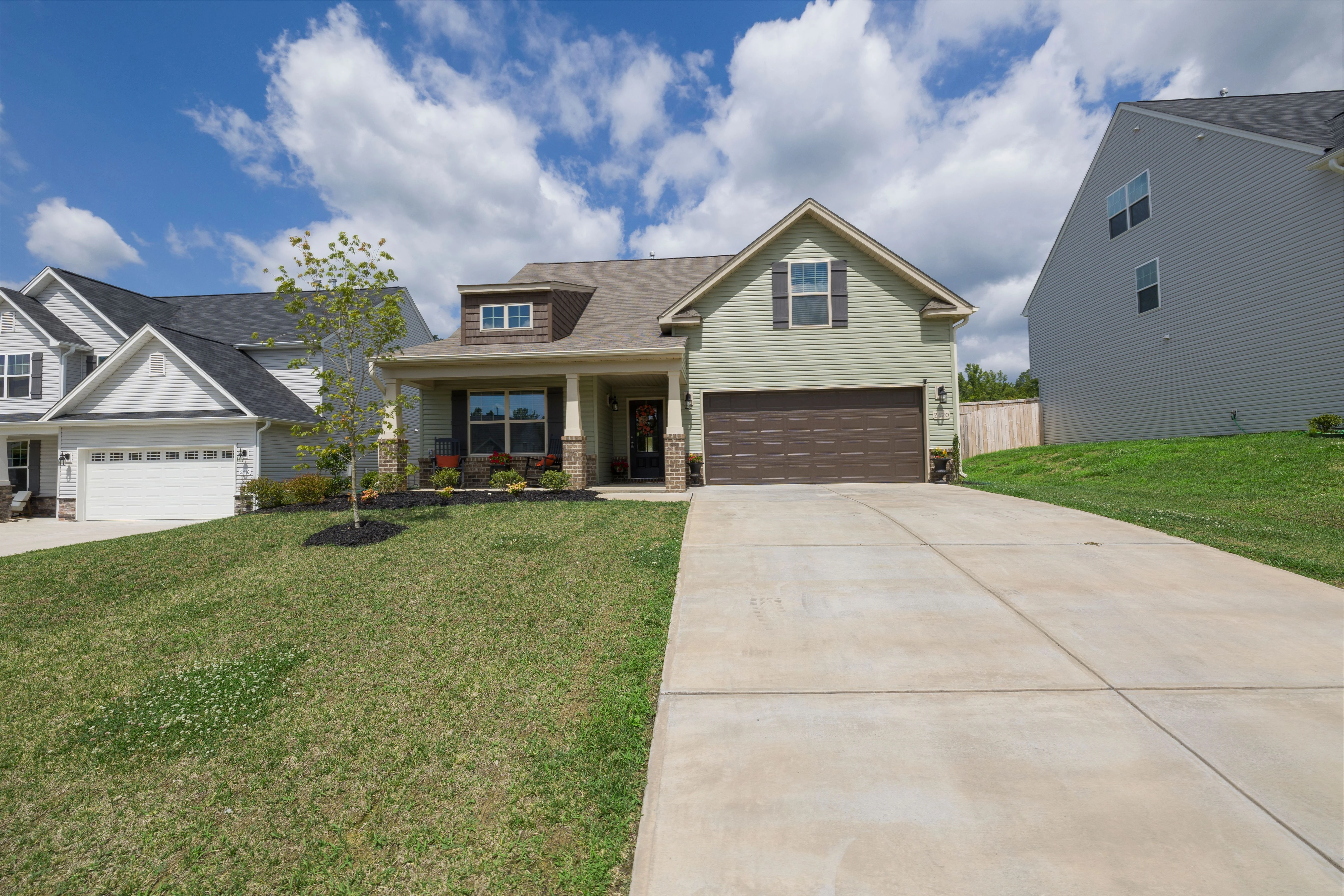
Ashburn sits in a climate band we'd call cold and severe, and that matters more for openers than most people think. It isn't the cold alone - it's the combination of ice storms and wind that knock out power right when temperatures are already stressing the hardware. A lot of the houses out here, and across the wider stretch that runs from Belmont Country Club three miles out to Brambleton at five and South Riding at eight, were built between 1938 and 2015 with a median year of 1982.
That means a huge share of openers in this area are original chain-drive units from the 1980s and 90s, installed before battery backup was standard equipment and before manufacturers built in any real cold tolerance. When the grid drops during an ice event, those units don't fail gracefully - the logic board loses power mid-cycle, the door sits wherever it stopped, and the owner is left standing in the driveway trying to remember where the release cord is. Newer builds nearby fare a little better, but the older stock that defines most of this service area doesn't have the redundancy to ride out a multi-hour outage without help.
The area
What Most People Get Wrong
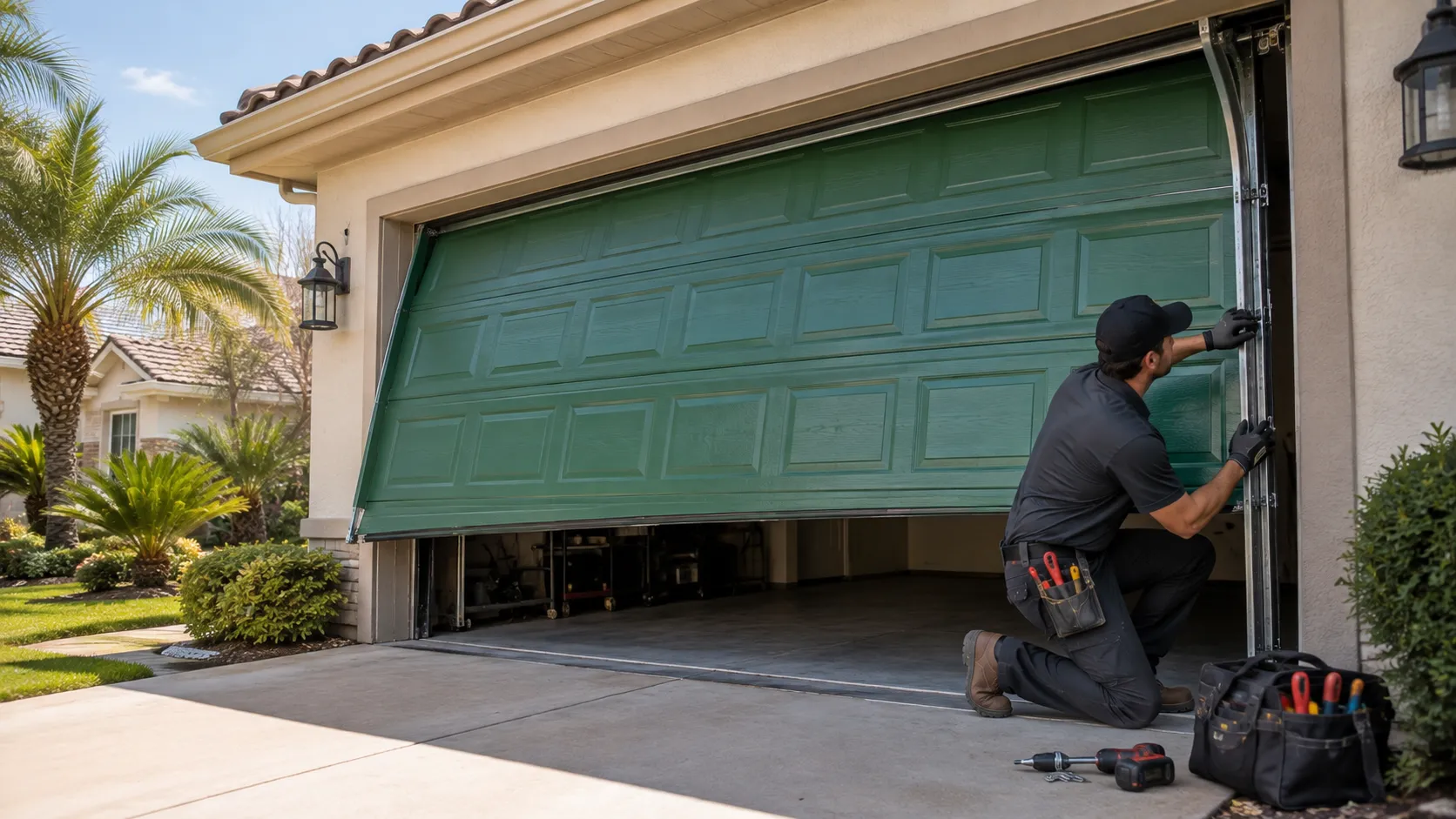
The most common mistake is assuming the manual release cord is a permanent fix rather than a stopgap. Pulling it disconnects the door from the opener carriage so you can lift by hand - fine for one night, not fine for a week while you wait out a repair. The second mistake is confusing a power cut with an opener failure.
If the door won't respond and the power's back on, the problem usually isn't the outage at all - it's a logic board or capacitor that took a hit during the surge when service was restored. Given that so much of the opener stock here dates to the 1980s and 90s, that surge is often the thing that finally kills a unit that was already on its last legs. People also assume any opener box at the hardware store will match their existing rail and mounting - on houses built in that era, that's often not true, and forcing a mismatched unit onto old hardware is how you end up with a second problem on top of the first.
What we find
What Is Going On
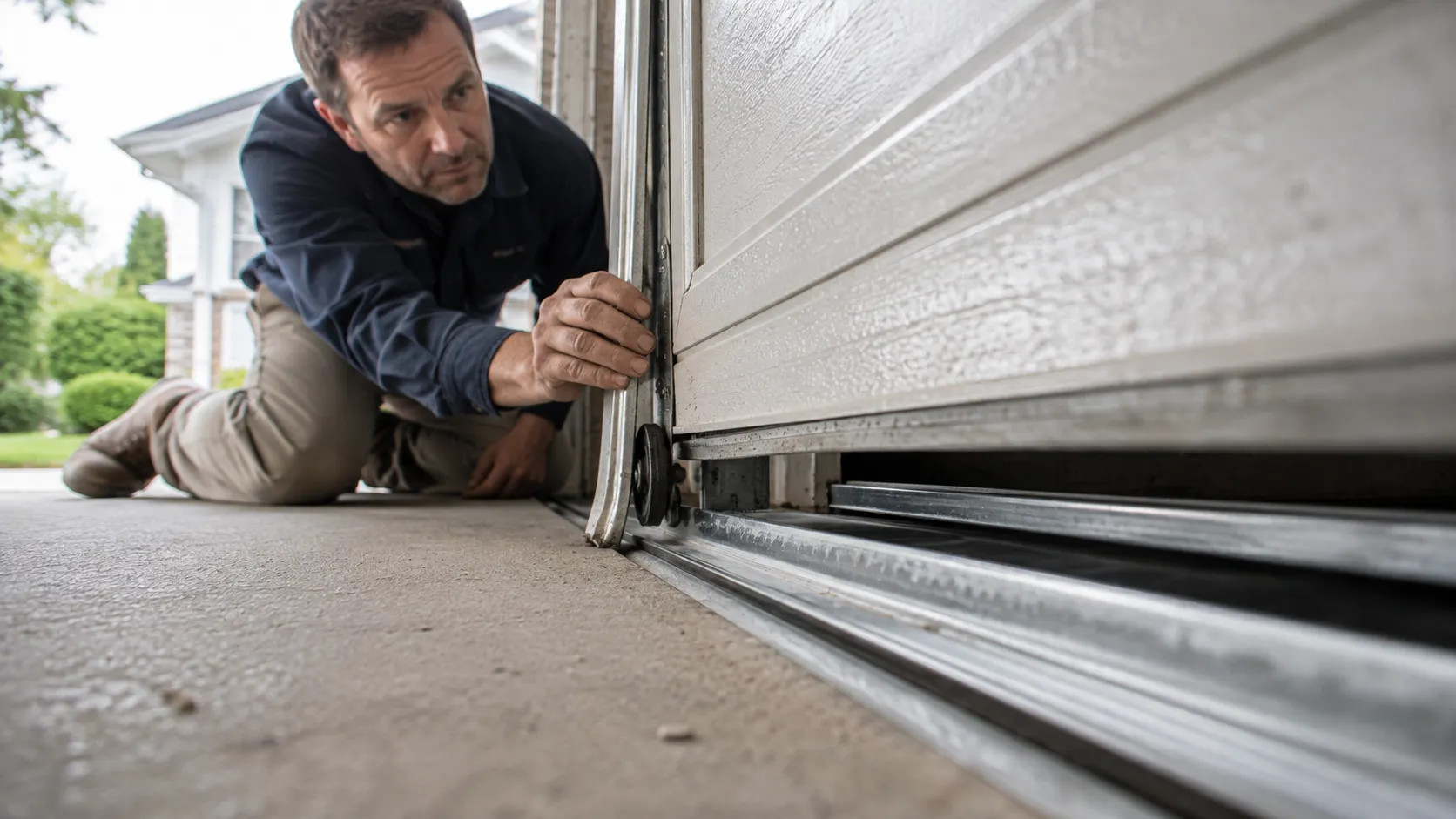
When power drops mid-cycle, the opener's board doesn't just pause - depending on the model, it can lose its position memory entirely, so the first thing it does on restart is a diagnostic cycle that looks like malfunction to most owners. On older chain-drive units common in houses from the 1980s and 90s, that recovery cycle is rougher because the boards weren't designed with today's brownout protection. Add a severe cold snap and you get a second failure mode: grease in the drive gear stiffens, the trolley binds, and the motor draws more current trying to push through - which is exactly the kind of load spike that finishes off a board already weakened by a prior outage.
This is why the pattern in this area tends to repeat: ice event, power cut, restoration surge, and a dead opener a few days later that looks unrelated to the storm but isn't. We don't stock every discontinued board for every 1980s-era opener - some of those parts simply aren't made anymore, and at that point replacement is the honest answer, not a repair quote that keeps you waiting on a part that may never ship.
How we work
When to Get Help
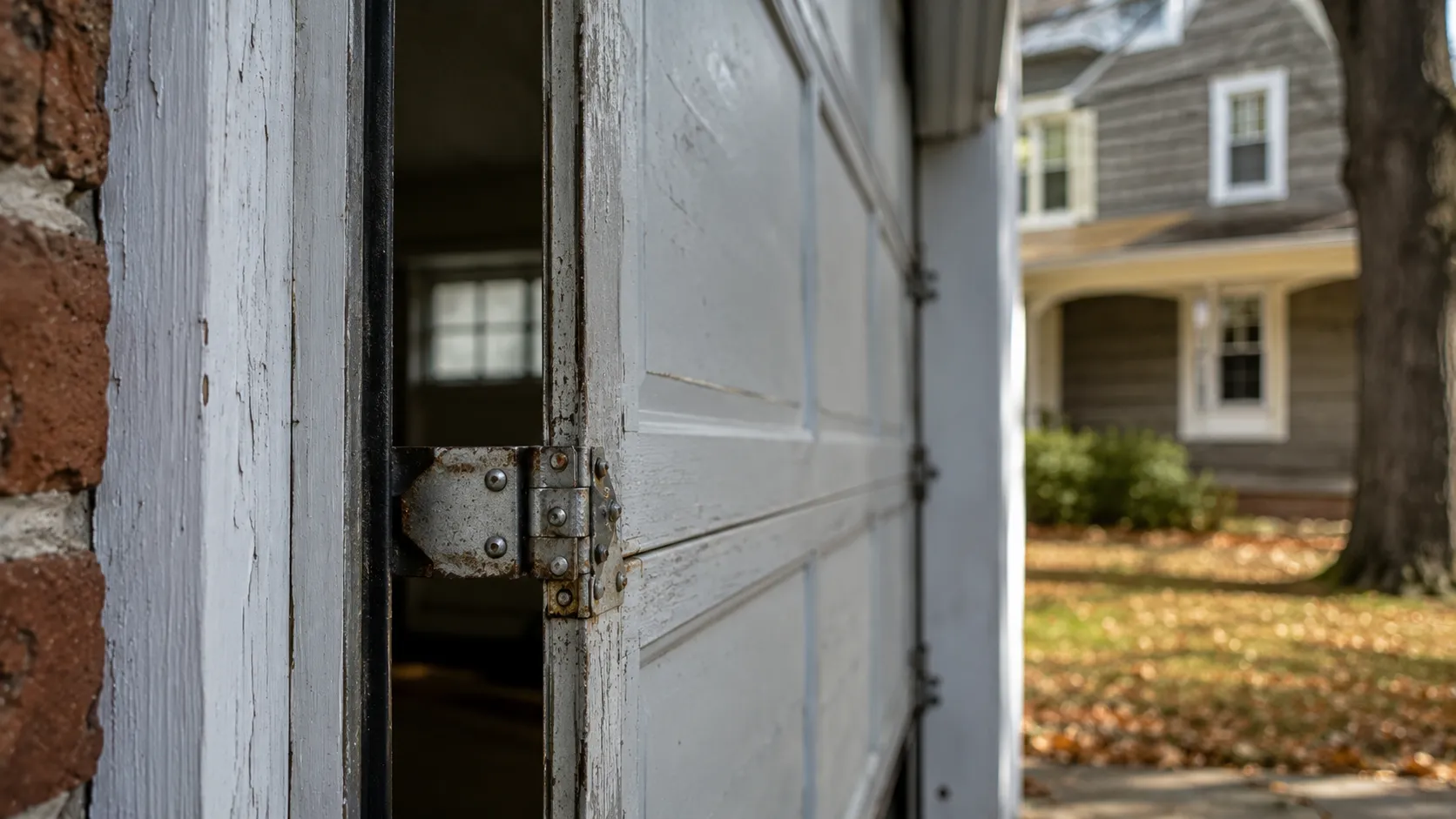
Call before you assume it's just the storm. If the door won't respond after power's restored, or it only half-opens and stalls, that's a board or capacitor problem, not something that clears up on its own. If you've been running on the manual release for more than a day or two because the opener won't reconnect, that's also worth a call - the spring and cable still need to do their job safely even with the opener disengaged, and a door hanging on an old release mechanism in freezing weather isn't something to leave alone.
If your opener is original to a house built in the 1980s or 90s, replacement is often the more honest recommendation than a repair, simply because parts for boards that old are getting harder to source every year. We'll tell you straight when that's the case instead of billing you for a fix that won't hold.
Questions
Common questions
Why did my opener stop working right after the power came back on?
That's usually a restoration surge, not the outage itself. Older boards - common in houses built in the 1980s and 90s here - don't always have surge protection, and the jolt when service snaps back on can finish off a board that was already weak. If it happens right after an outage, it's worth having the board checked rather than just resetting it.
Is the manual release cord a real fix during a power cut?
It's a stopgap, not a fix. Pulling it disconnects the door from the opener so you can lift by hand, which is fine for one storm night. Leave it disconnected for days and you're relying on the spring and cable alone with no opener assist - not something to do long-term in freezing weather.
My opener is original to the house - is it worth repairing or replacing?
Depends on the age and the part needed. A lot of houses in this area date to the 1980s and 90s, and boards for openers that old are getting harder to find. If the part's discontinued, replacement usually costs less in the long run than chasing a repair that may not hold.
Ready when you are
Need a garage door sorted in Ashburn?
Ashburn Garage Door Pros repairs and installs garage doors, springs and openers in Ashburn, VA and the surrounding area.