Custom width longer lead time
Custom widths and heights mean longer lead times than a stock 16-by-7 door, and we tell customers that up front rather than promise a date we can't hit.
Great Falls, Ashburn
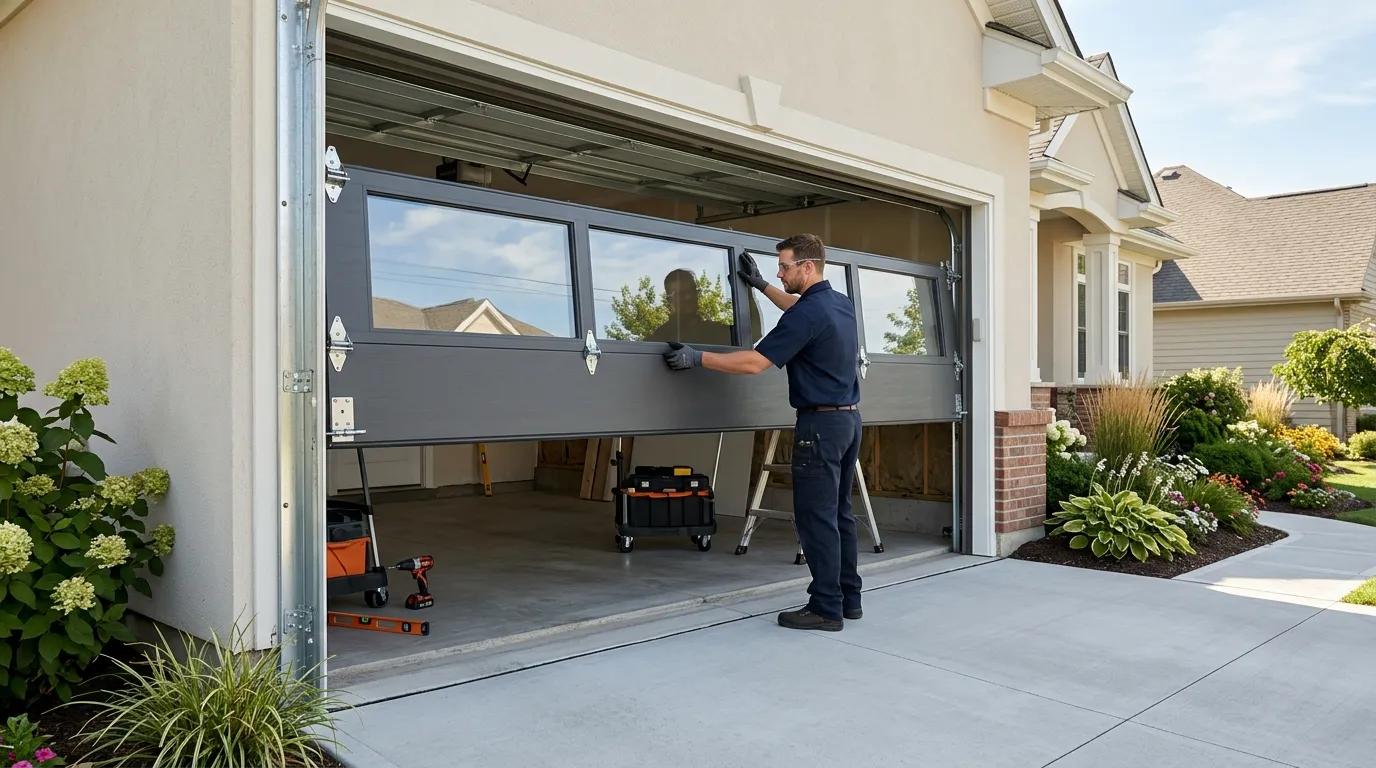
Serving Great Falls from Ashburn, 9 miles out. Doors here mostly date to the mid-1980s build wave - we size new installs to match that era's openings and hardware.
Local causes
Most houses in Great Falls went up around 1985, which puts a lot of original garage doors at the tail end of their working life. That era leaned on single-layer steel or wood sectional doors, paired with extension springs or undersized torsion springs that were never rated for the weight of a modern insulated panel. If your door is original to the house, the track is probably still the narrow-gauge steel that came standard back then, and the opener - if it's been replaced once already - is likely a mid-2000s chain drive nearing its own end.
The other thing 1985 construction tells us is opening size. Builders of that period in this part of the county worked with fairly standard two-car openings, usually 16 feet, which is good news: parts and doors sized for that era are not hard to source. What's harder is finding a straight match if the frame has settled or shifted over 35-plus years, which is common enough that we always re-measure rather than trust the original spec sheet.
Watch-outs
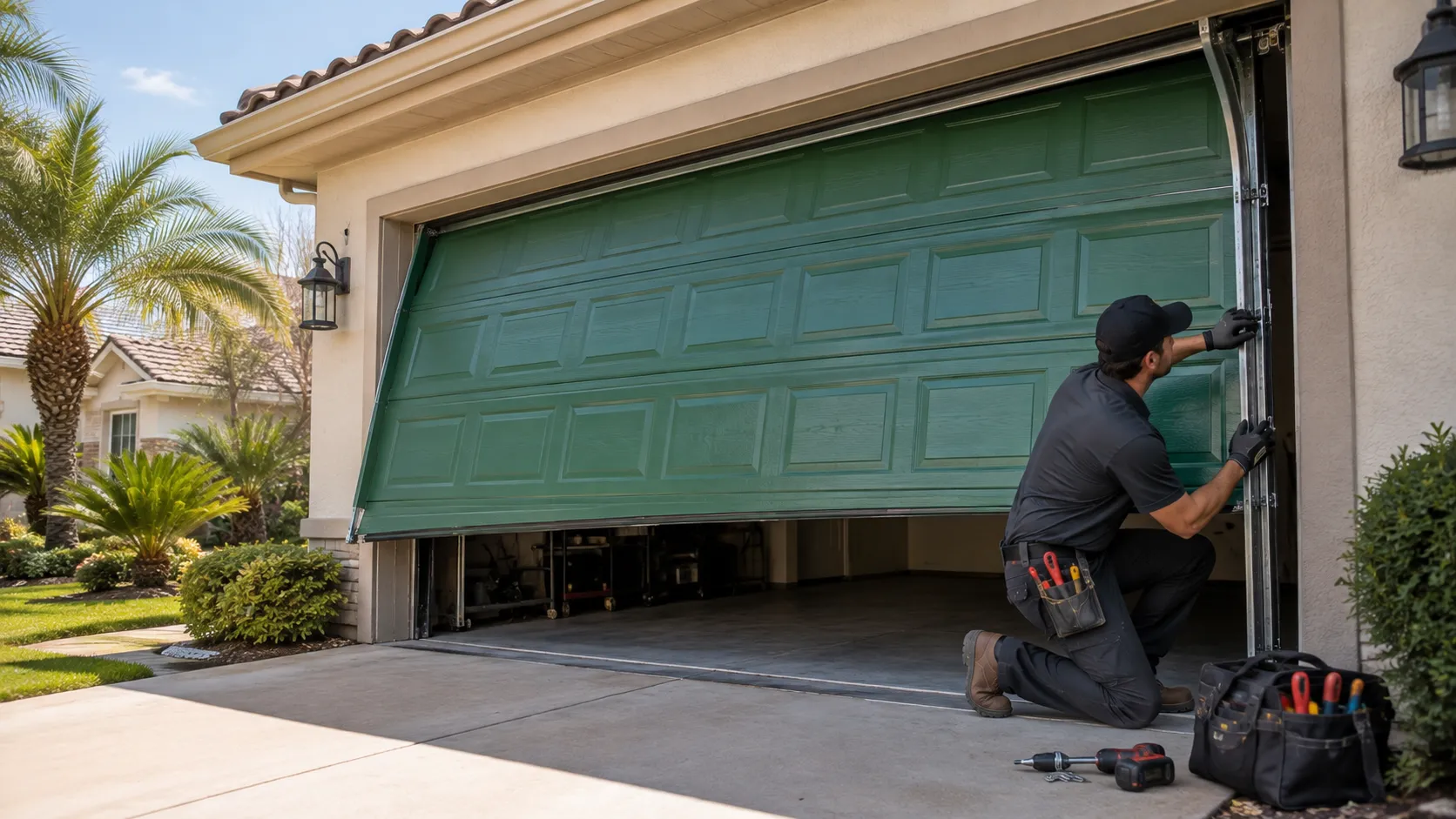
Great Falls carries a median household income of $250,001, well above the wider service area, and that shows up in the request itself: more custom widths, taller openings for oversized SUVs or trucks, and a preference for insulated wood-look steel doors over the plain flush panel that shipped standard in 1985.
Custom widths and heights mean longer lead times than a stock 16-by-7 door, and we tell customers that up front rather than promise a date we can't hit.
The service area sits in a cold-severe climate band, which matters more on a wider or taller door because there's more surface for a temperature swing to work against. A bigger insulated panel needs a spring calibrated to its actual weight, not the weight of whatever door came off the house.
Get that wrong and you get a door that either won't stay open or slams down - neither of which is a small fix once the opener's been fighting the wrong spring tension for a season.
DIY or pro
A homeowner can absolutely swap weatherstripping or a roller. A full new-door installation is a different job, and honestly, we'd rather talk you out of doing it yourself than sell you a kit and a wave.
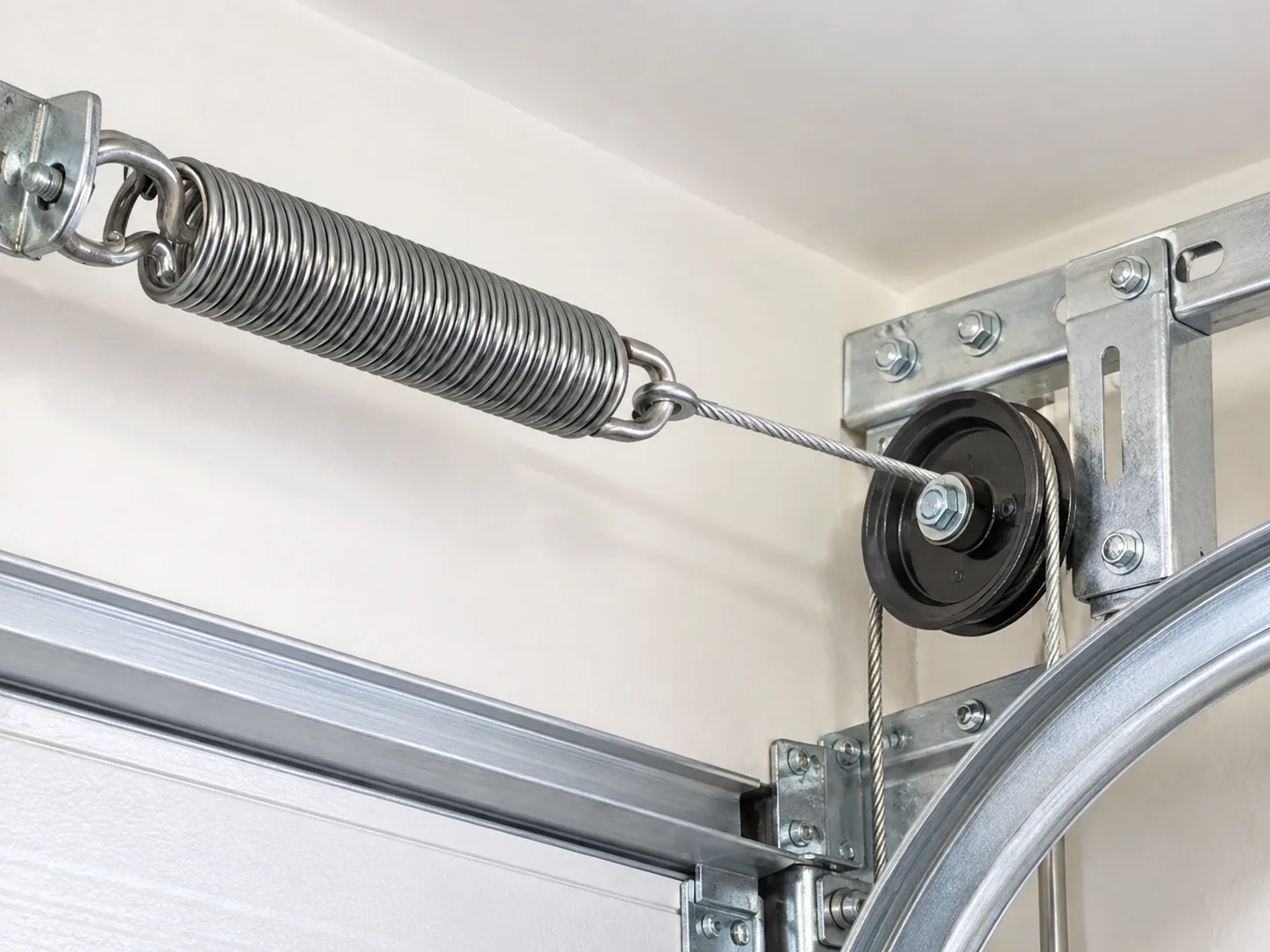
Torsion springs on a wider or taller door - the kind that's common in Great Falls given the income and lot sizes here - carry enough stored force to break a wrist or worse if the winding bar slips.
Balance also has to be set to the exact panel weight, and that's not a guess-and-check process; it's a measurement with real consequences if it's off. Where we do point people toward doing it themselves: cosmetic hardware, weep hole clearing, lubricating hinges and rollers on a door that's otherwise sound.
If the door itself is original to a 1985 build and still opening fine, replacing rollers and springs on a maintenance schedule can buy years before a full swap is worth the cost.
The repair
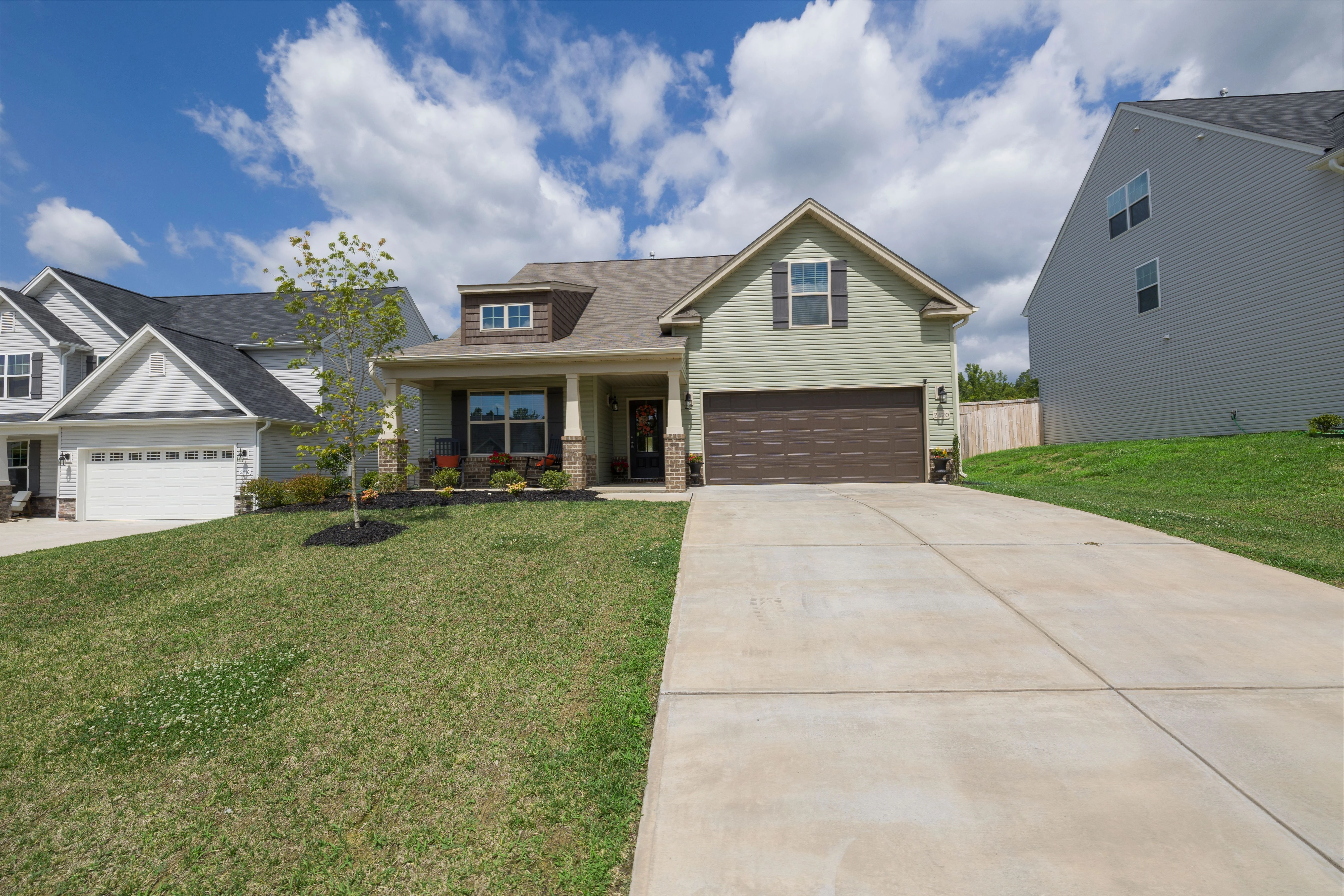
We start by measuring the actual opening, not the builder's original spec, since houses from the 1985 wave have had 35-plus years to settle. From there we size the new door and the torsion spring together as one unit - panel weight, insulation value, and track length all factor into the spring rating, and skipping that step is the most common reason a new door underperforms right out of the gate.
Given the climate band this area sits in, we default to insulated steel panels rather than the single-layer steel that was standard when most of these houses were built - better for keeping a garage above freezing and for cutting the temperature swing that stresses hardware over time. Old door and track come off and get hauled out. New track gets set plumb and shimmed to the actual frame, not the nominal opening. Opener gets matched to the new door's weight rather than reused blind, since a 1980s-rated opener won't safely run a heavier modern panel.
Questions
No. We run out of Ashburn and cover Great Falls as part of the wider service area, about 9 miles out. We don't keep a branch or depot in Great Falls itself - every job here is a truck coming from Ashburn, which we're upfront about when we schedule.
Usually, but we don't assume it. Openings from that build era were fairly standard, but 35-plus years of settling can shift a frame enough that a stock door needs shimming or a custom width. We measure on site before ordering rather than trust the original builder spec.
Because it almost certainly weighs more. Insulated panels, common in Great Falls given the climate here, weigh noticeably more than the single-layer steel doors that were standard when most of these houses went up in the mid-1980s. The spring has to match the new panel, not the old one.
Given the cold-severe climate band this area sits in, yes, in most cases. An insulated panel holds temperature better and puts less cyclical stress on the opener and hardware than the single-layer steel that was common when Great Falls homes were originally built.
Explore more
Ready when you are
Ashburn Garage Door Pros repairs and installs garage doors, springs and openers in Ashburn, VA and the surrounding area.