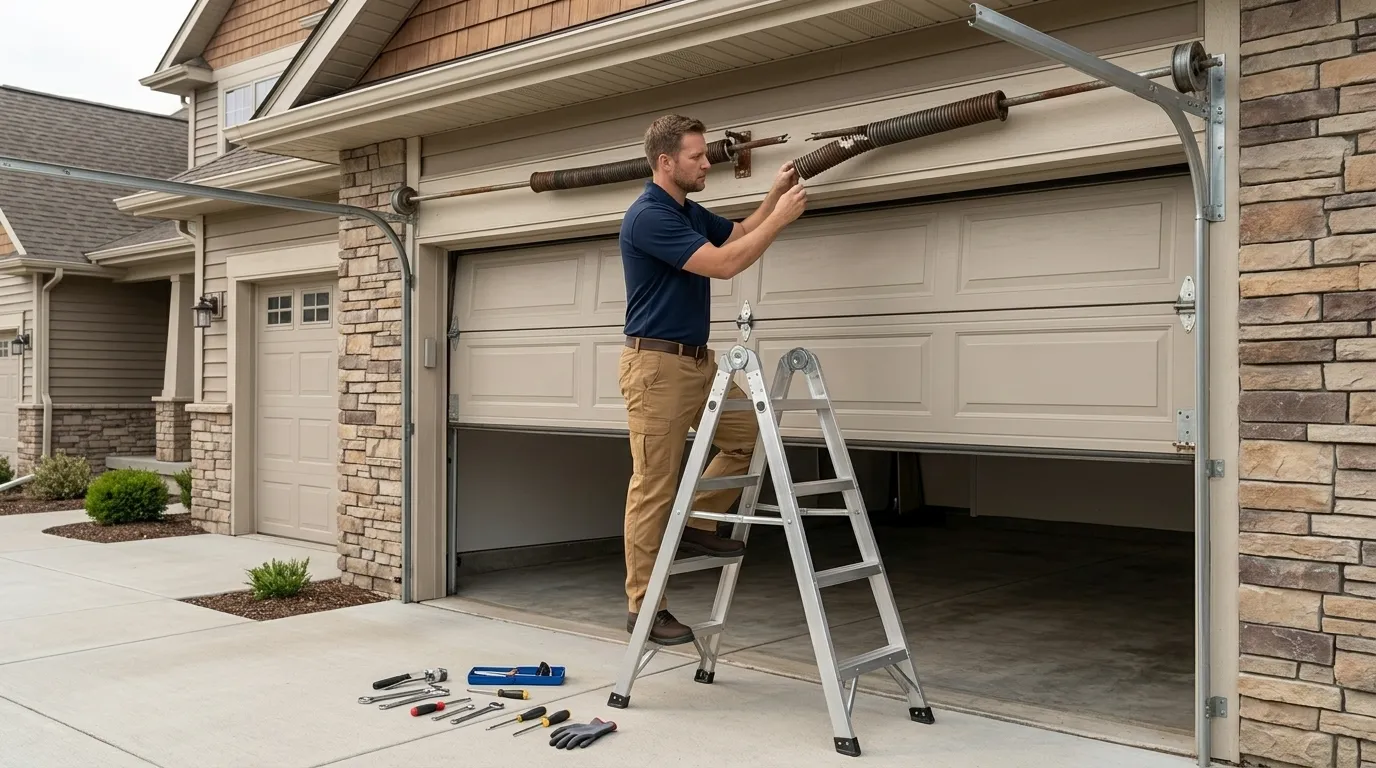
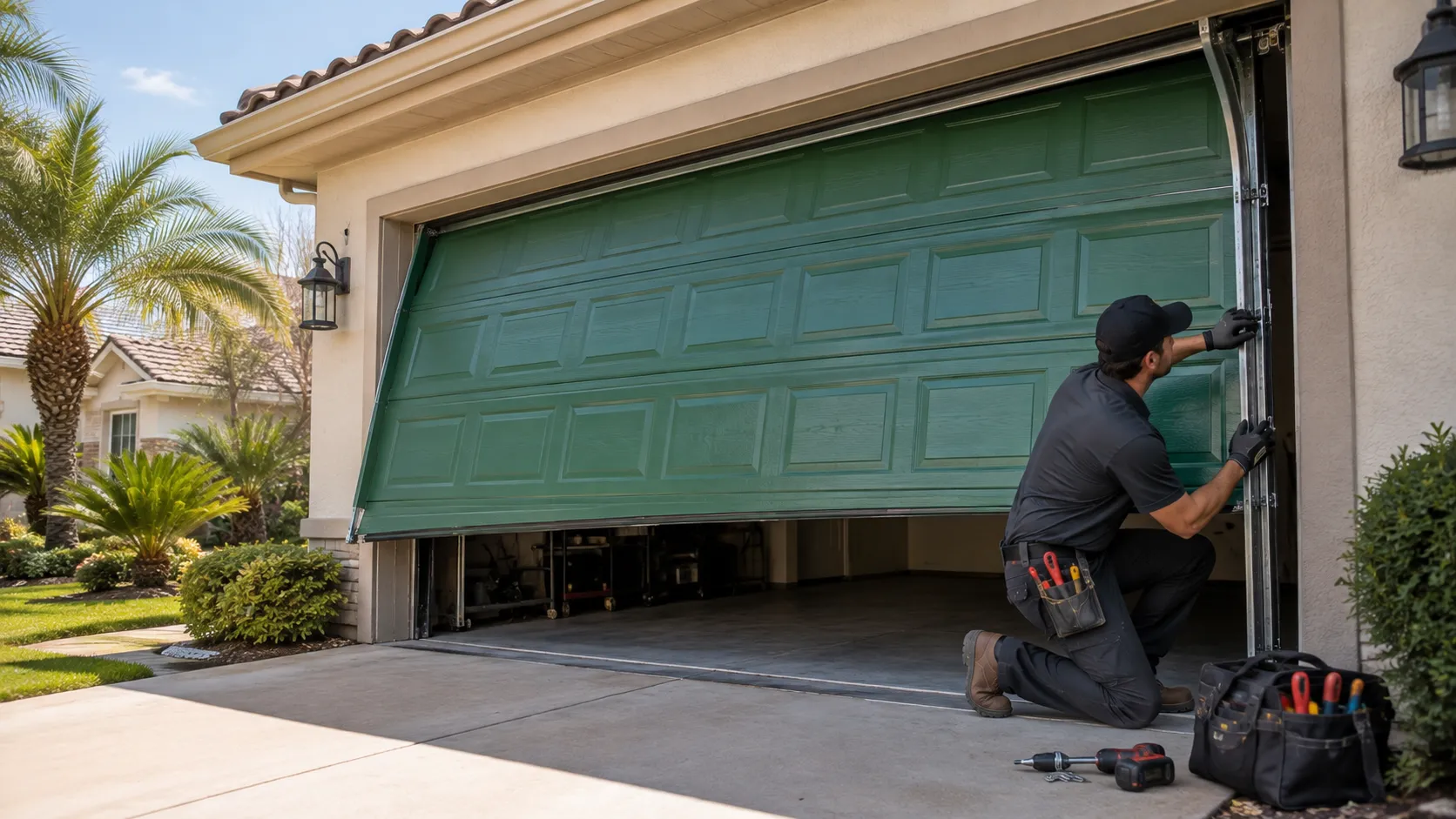
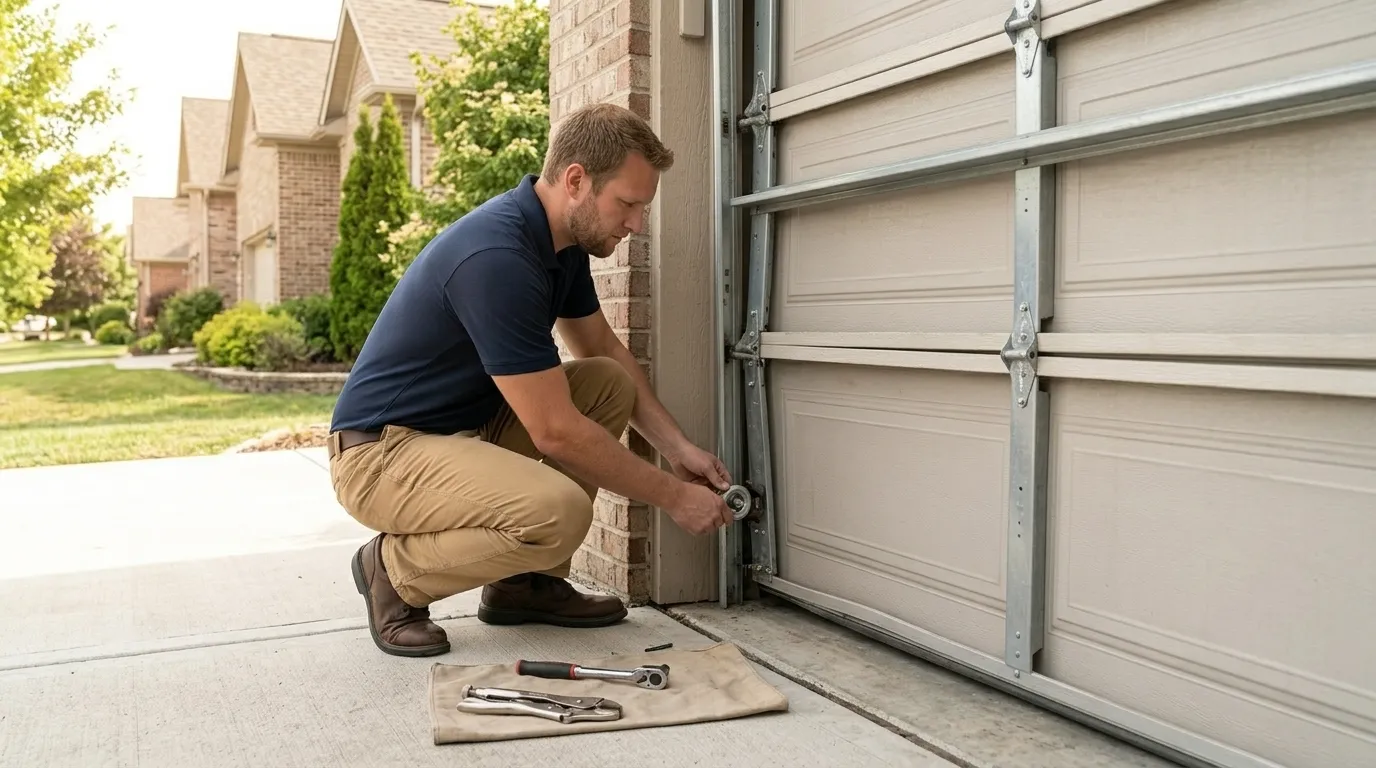
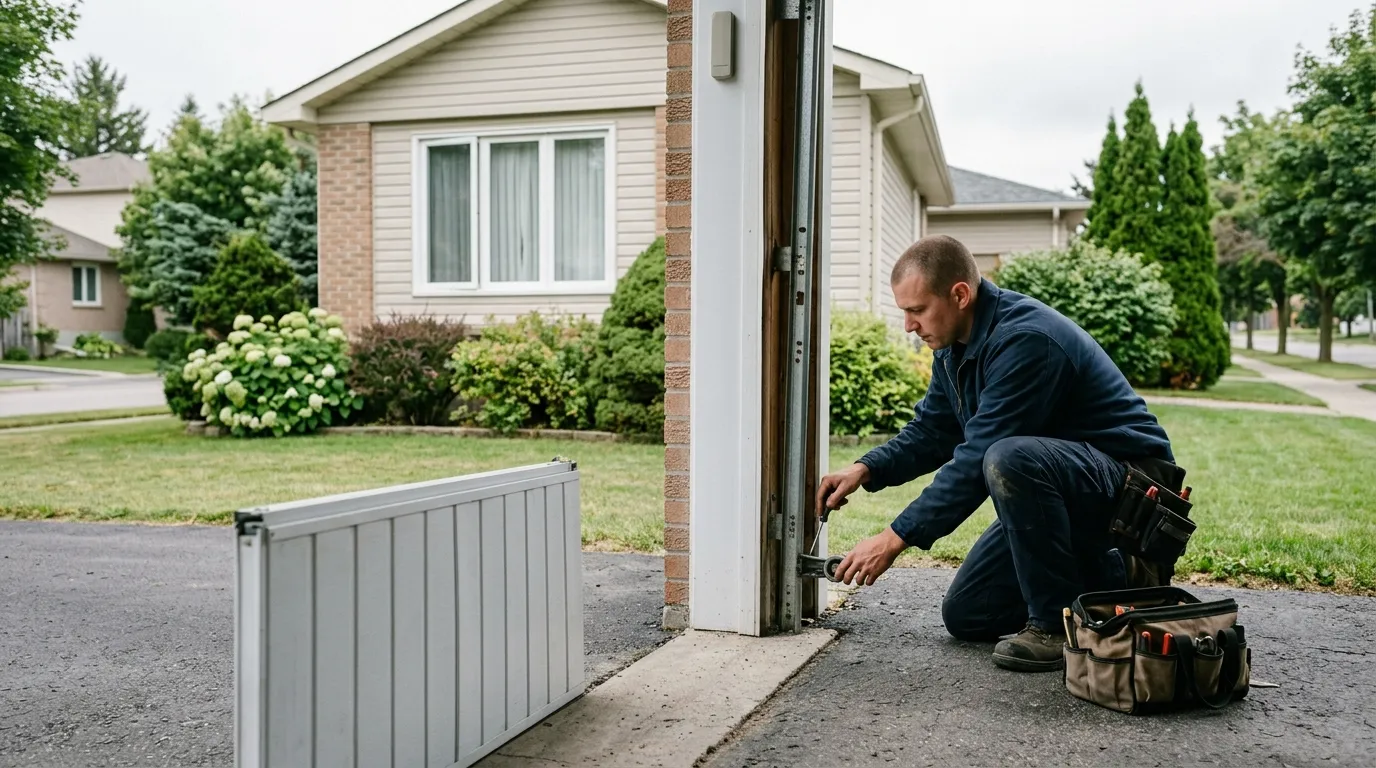
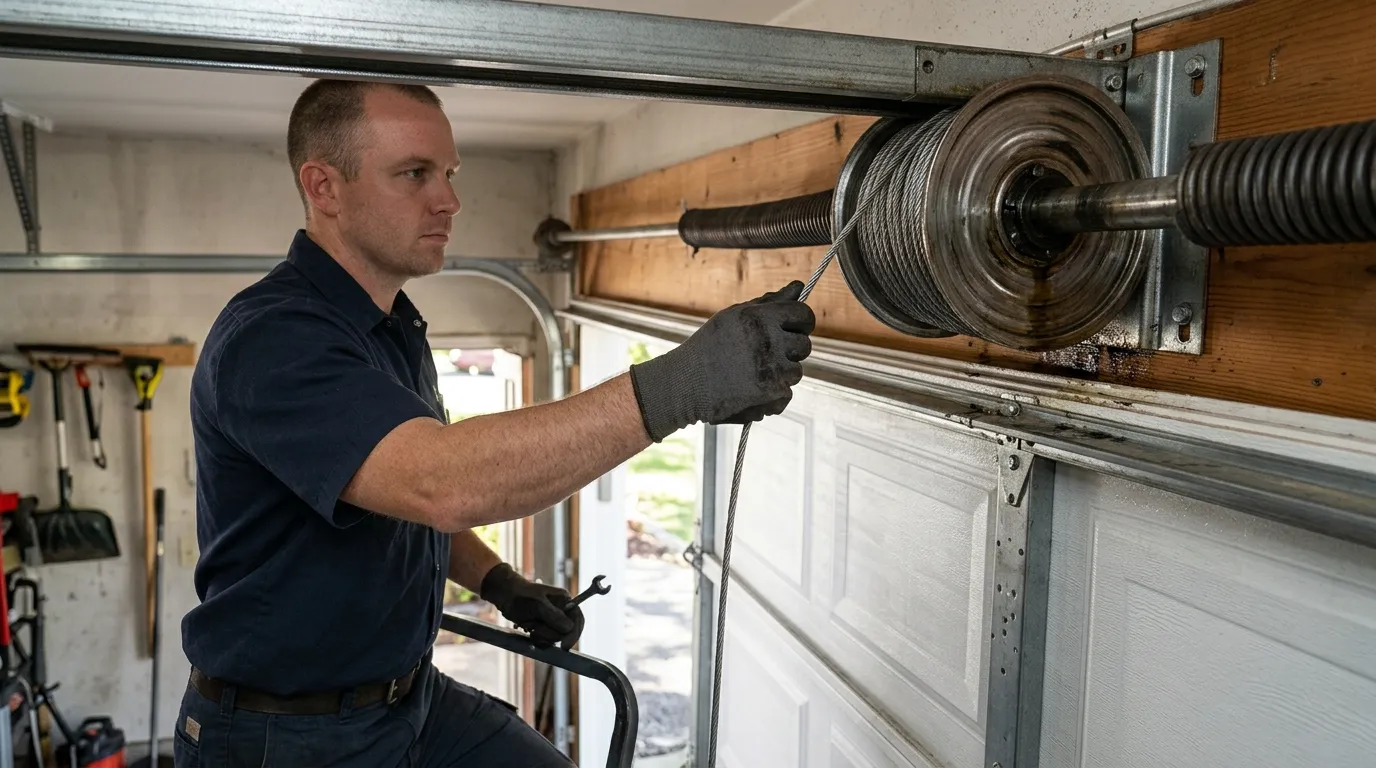
Two things drive spring failures in this part of the service area more than anything else: age and cold. Housing here was built between 1938 and 2015 with a median year of 1982, and springs have a rated cycle life - usually somewhere around 10,000 open-close cycles - that most of that older stock has long since used up. A door installed when a house was built in the mid-80s has been through four decades of cycles by now, and steel fatigues whether or not anyone's paying attention to it.
The climate here is classified as cold with severe swings, and that matters more than people expect. Torsion springs lose a bit of tensile flexibility in hard freezes, and a spring that's already 90% worn is far more likely to be the one that snaps on the coldest morning of the year rather than a mild one. We also see a fair number of failures tied to the 31 distinct pockets of housing stock across this service area, since a lot of them were built in a tight window in the 1980s and 90s - meaning entire streets of similar-age doors tend to start failing in the same few years. If your neighbors on either side have had a spring go recently, yours is probably not far behind.